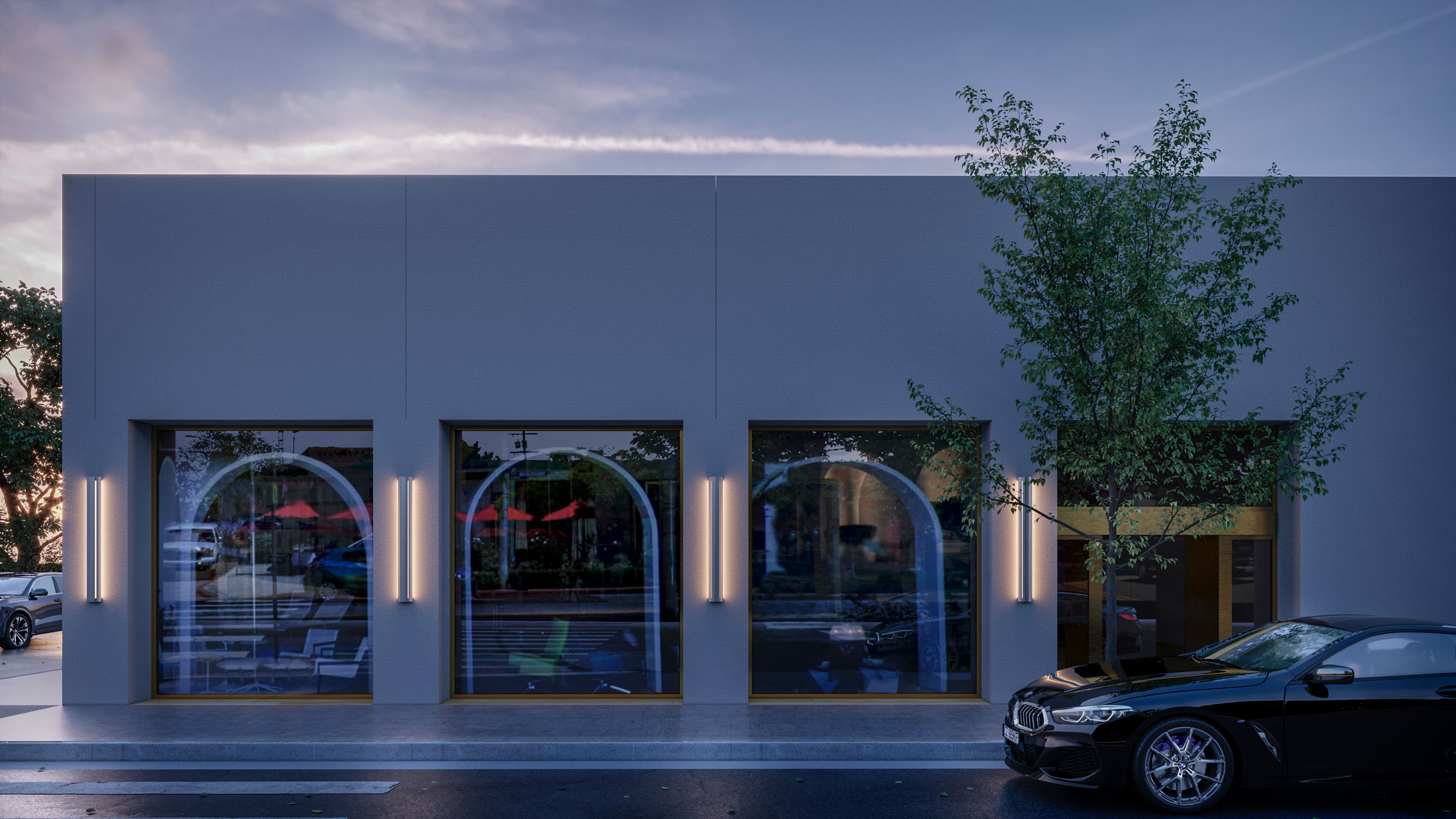
Where do all those names come from?
There’s usually a story behind them. Sometimes the name comes from the shape. Sometimes it describes what the fixture does. Sometimes it’s a nod to the person or idea behind the design. And sometimes, frankly, we just know a good name when we hear one.
But the story behind an Alva product starts well before the name.
Every sconce is designed to solve something, whether that means highlighting architecture, creating a cleaner corridor, integrating identification into the fixture, or simply responding to something our customers have been asking for.
So, what’s in a name? Let’s look at a few.
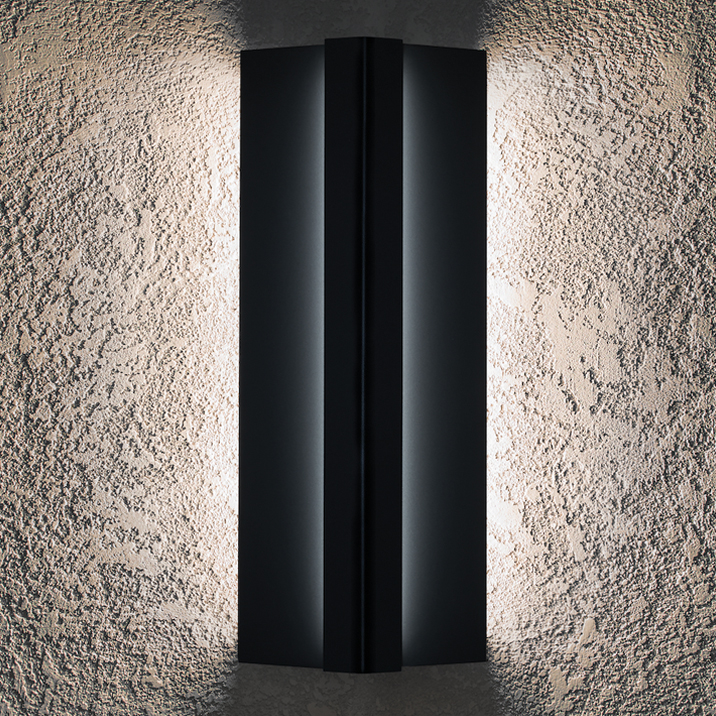
When we developed Tex, the goal was to create a large-scale architectural sconce that did more than illuminate a building. We wanted the light itself to help reveal the architecture.
Architects put tremendous thought into façade materials, finishes and texture. Tex projects light from its sides to graze the building surface, allowing those details to become part of the nighttime experience.
Tex is all about texture. Once we realized that, the name practically wrote itself.
The idea evolved from there.
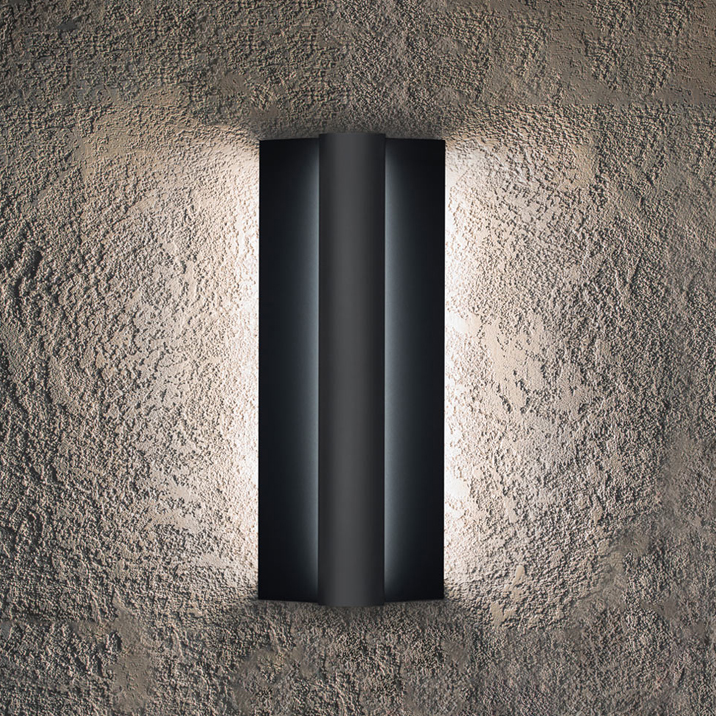
Tess brought a softer, curved façade to the same design language. Then, as specifiers began looking for narrower sconces, Tessie followed.
That narrower profile serves a very practical purpose. Narrow architectural columns have long been part of building design, but we’re increasingly seeing designers use lighting to bring those elements to life after dark. A narrower sconce fits the architecture more naturally, allowing designers to illuminate columns without overwhelming their proportions.
There’s a functional consideration, too. Exterior lighting is increasingly being used to support visibility and a greater sense of security around buildings and public spaces. Tessie gives designers another way to address those needs while still respecting the architecture.
Same family. Different forms. And names that make them pretty easy to remember.
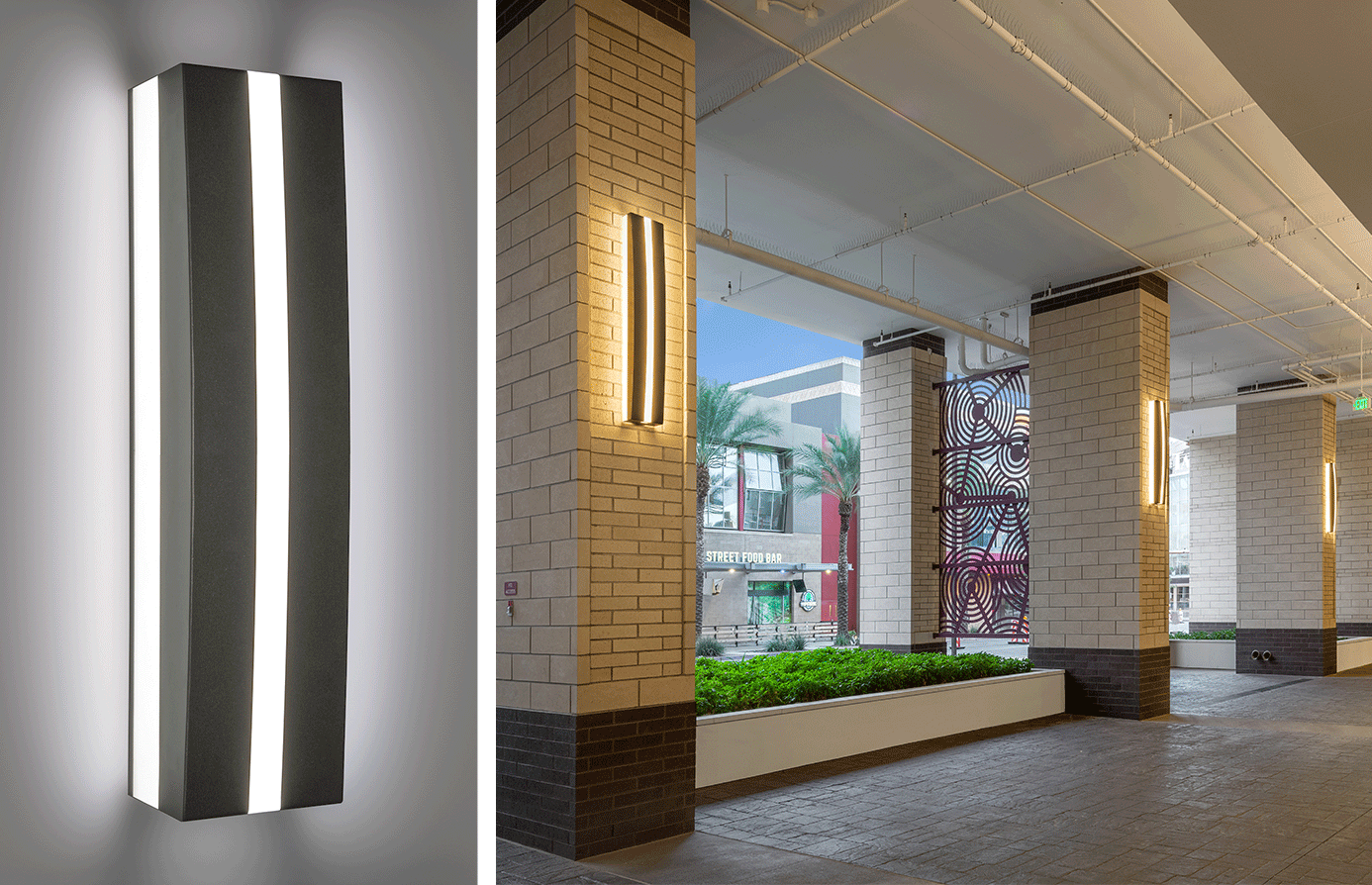
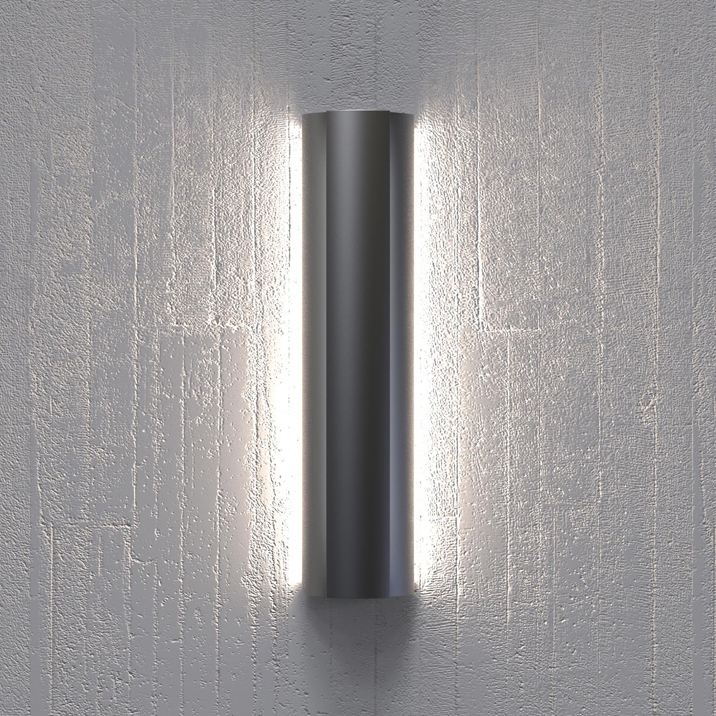
Beau began with the form itself: a large-scale architectural sconce distinguished by its bowed façade.
That curve gives the fixture a different presence on the wall than a traditional flat or angular sconce and became the inspiration for its name.
Bowed. Beau. You get the idea.
And for the theater trivia buffs: Beau is also short for Beauregard. Auntie Mame, anyone?
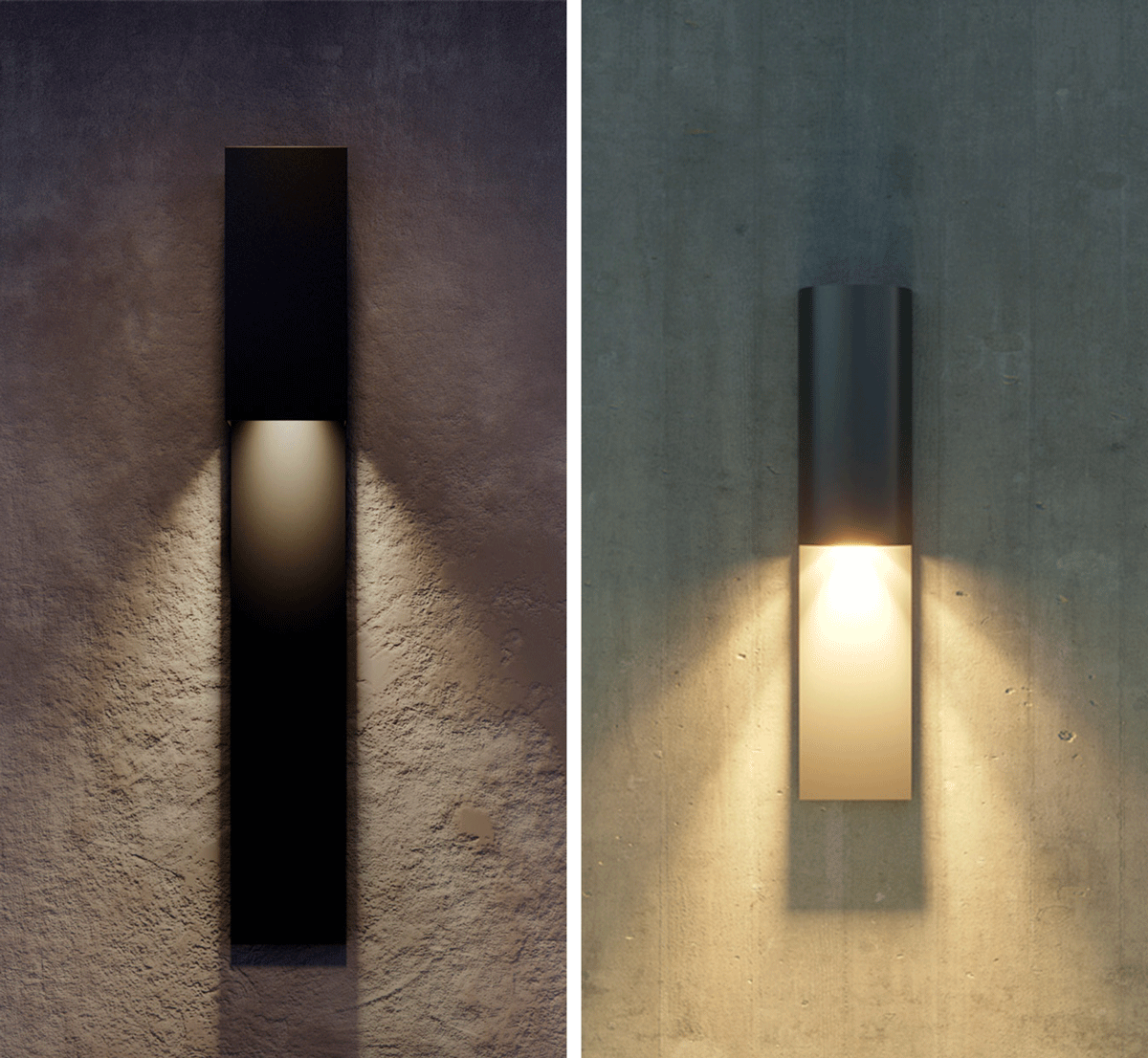
Brian and Brianna share a common design language, with Brian taking the more angular form and Brianna introducing a curved façade. But there’s a bigger story here than their names.
When we introduced Brian, it was Alva’s first Dark Sky compliant fixture, responding to a growing need for exterior lighting that puts light where it’s needed while minimizing unnecessary light into the night sky. For specifiers in the Mountain States, this is hardly a new conversation. Many communities have requirements intended to reduce light pollution, and we’ve watched those considerations expand into more markets over the years. I remember being surprised when Maui adopted new requirements several years ago. It was a good reminder: Dark Sky considerations aren’t limited to the places you might expect. For designers working on exterior applications, it pays to be prepared.
Brian gave us a way to address that need without sacrificing the quality of light that is fundamental to Alva. Our approach to LED boards and optics helps us deliver the controlled, considered illumination specifiers expect, directing light purposefully while still creating a beautiful architectural experience. And Brian has another Alva connection. One of the talented design engineers behind our boards happens to be named Brian. His work has contributed to many of the lighting solutions in our portfolio, so giving one of the products his name felt pretty appropriate.
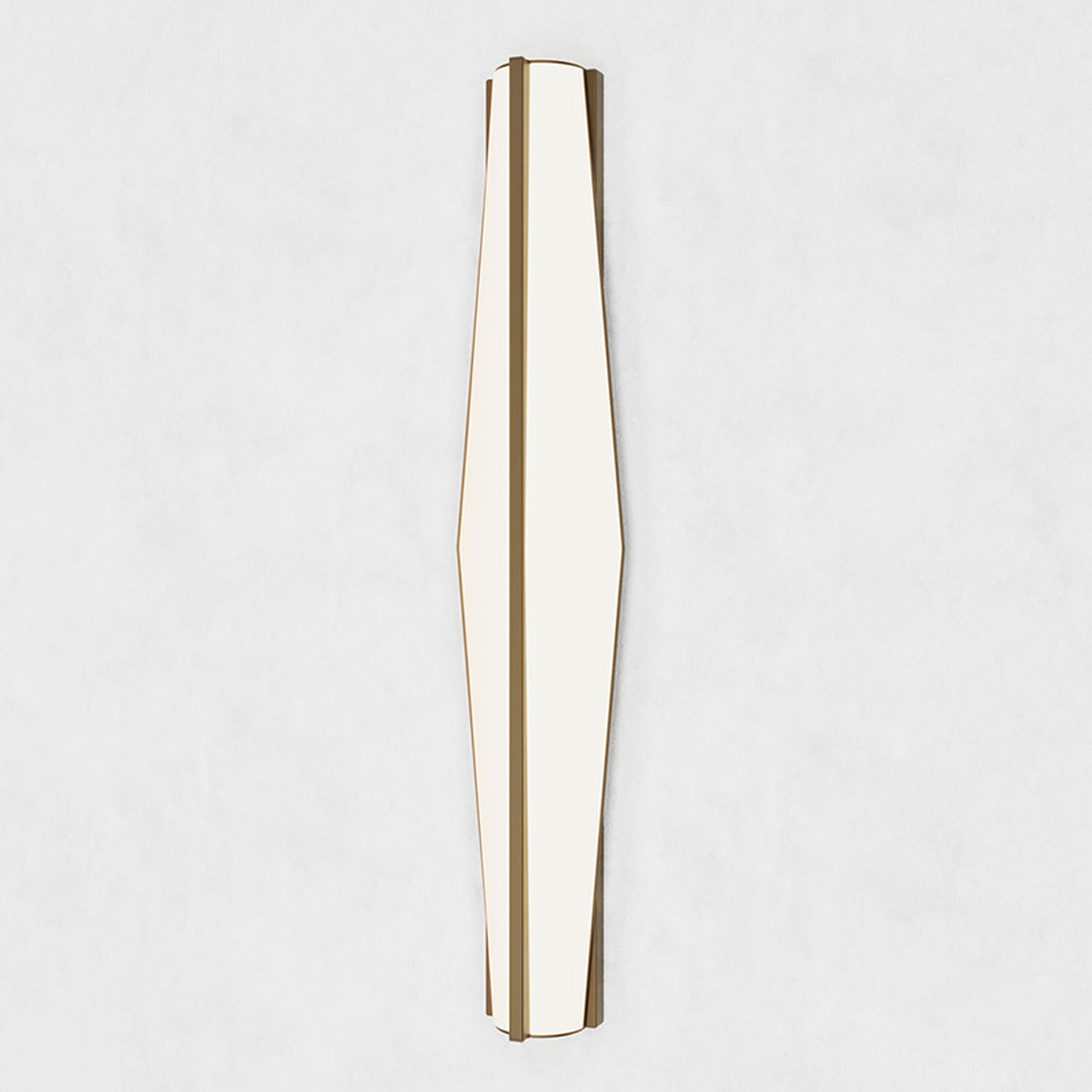
Some Alva products begin through collaboration, bringing a different perspective to the way we think about light and product design.
Award-winning Los Angeles lighting designer Scott Johnson has contributed several fixture designs to Alva, including the exterior sconce Amadeus. I first met Scott during his time at Wolcott Architecture, where he began on the architecture side of the business. But lighting was always his passion, and he eventually moved into lighting design, supporting Wolcott’s architectural projects.
That combination gives Scott an interesting perspective. He understands the role a fixture plays within the architecture, but he also knows it has to perform to the standards a lighting designer expects. Amadeus grew from that balance of form and performance.
Once we had the fixture, of course, we needed a name. Scott happens to be a classical music buff, so we looked to one of classical music’s most recognizable names: Wolfgang Amadeus Mozart. We went with Amadeus.
Probably better than Wolfgang for a wall sconce. What do you think?
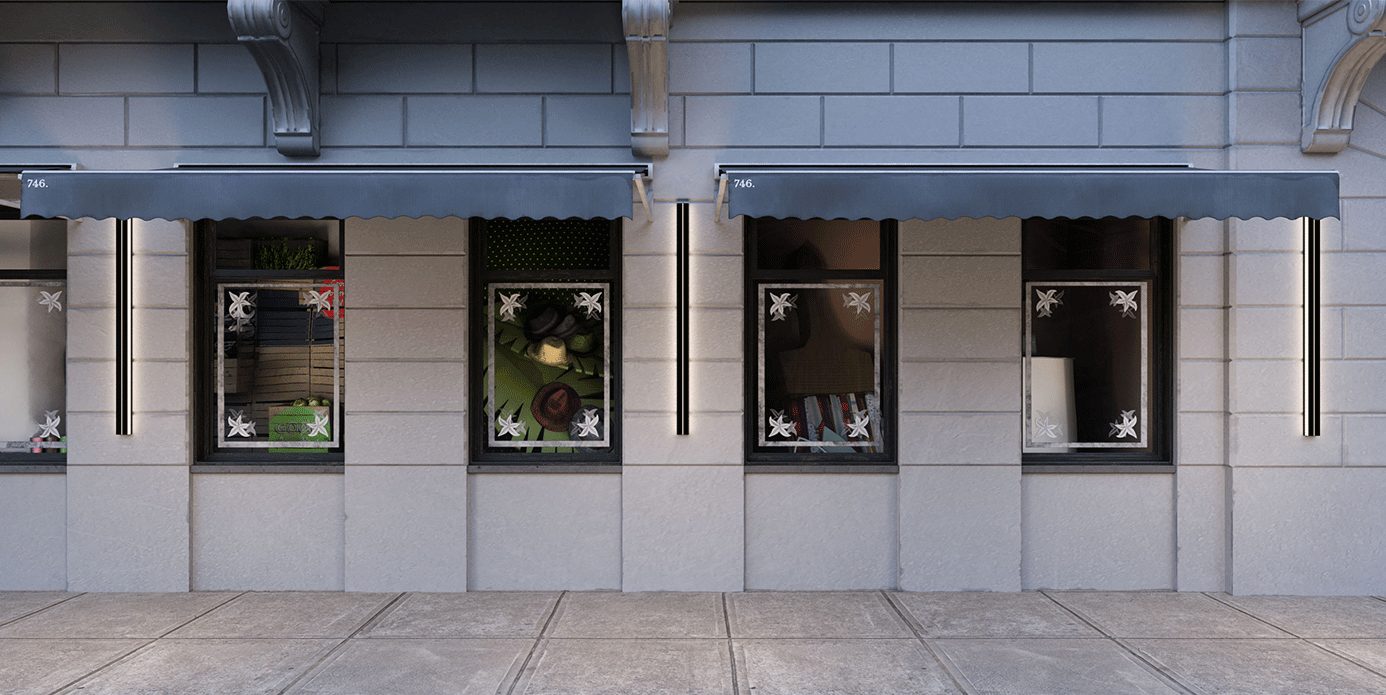
Sometimes the defining feature gives us the name.
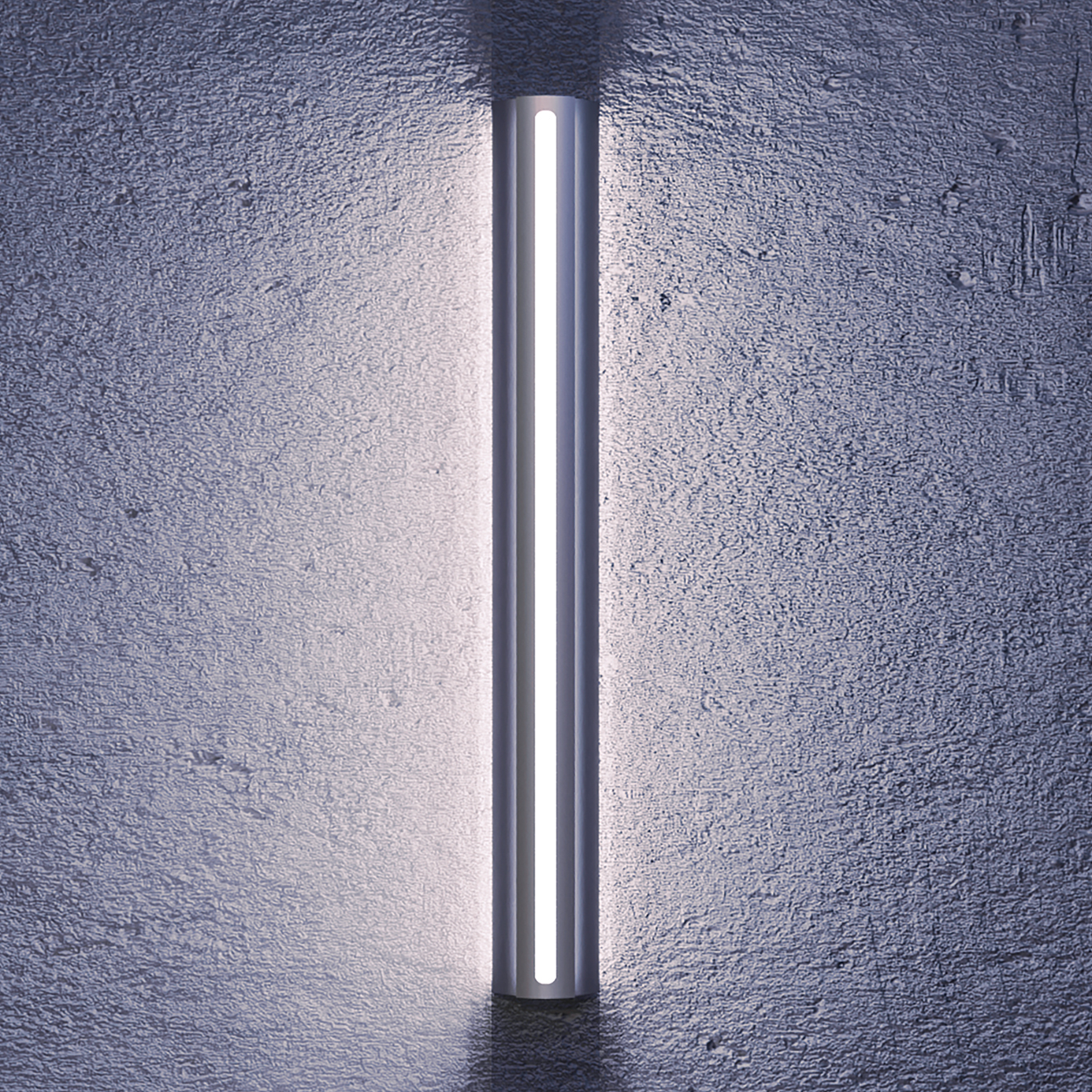
Sliver features a narrow slot in its façade that allows just a sliver of light to emerge through the fixture.
It’s a small detail with a surprisingly dramatic effect, adding depth and a bit of mystery to the wall rather than simply flooding it with light.
In this case, there really wasn’t a better name.
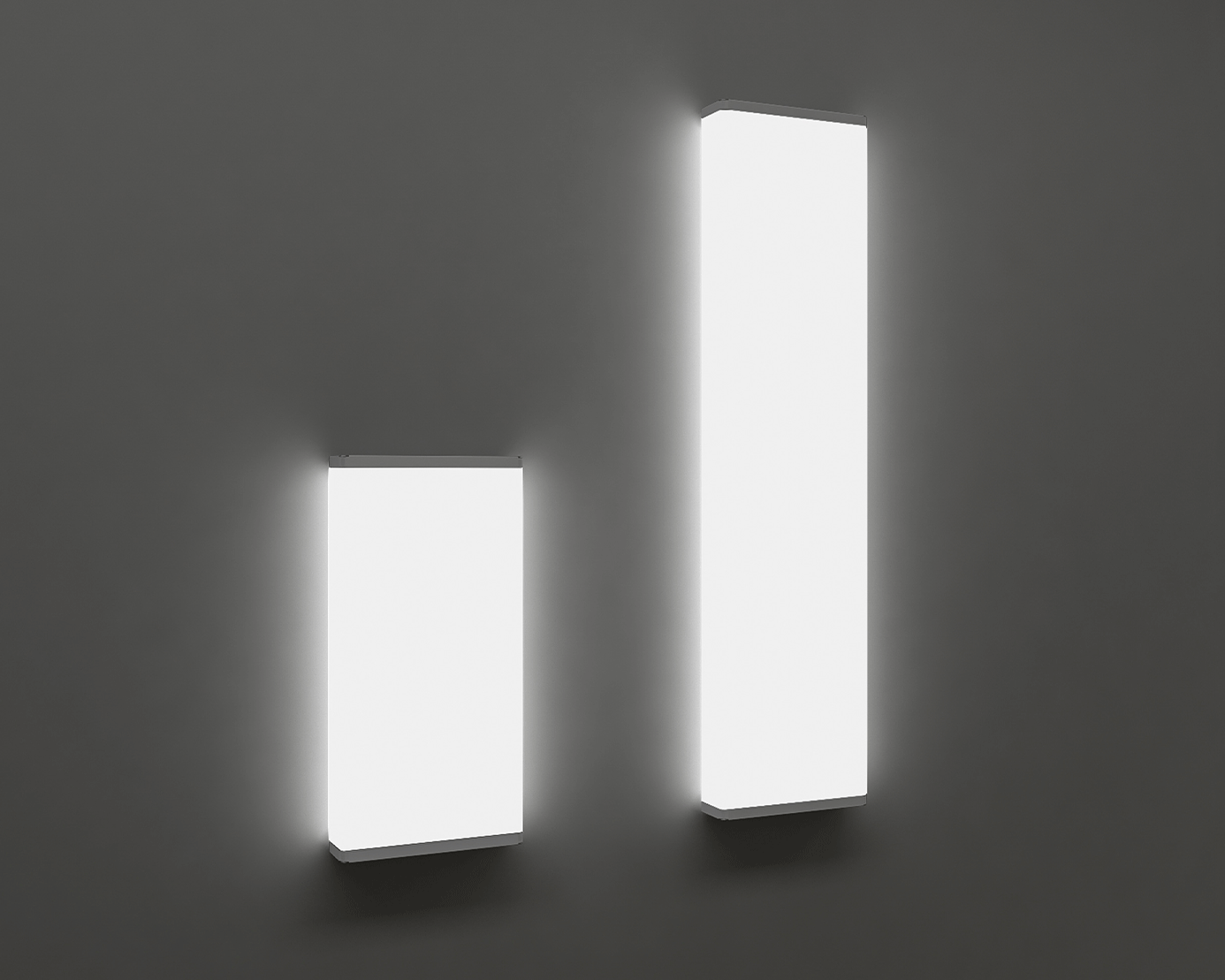
Here’s a little lighting history. For decades, ADA guidelines have established a maximum projection for wall-mounted objects in circulation paths. But today’s LED technology gives designers opportunities that weren’t possible with the larger light sources of the past.
That led us to ask a simple question: If we can make a sconce shallower, why wouldn’t we?
Slim projects are less than 2 inches from the wall, creating a low-profile aesthetic that is particularly valuable in corridors and other circulation spaces. And because sconces are often experienced from the side as we move through a space, that profile matters. It’s one reason Slim has found a natural home in healthcare environments, where keeping fixtures close to the wall can help create cleaner, less intrusive corridors. Its sealed construction also helps keep bugs and dirt out of the fixture.
A practical problem. A simpler profile. Hence, Slim.
Multifamily presented us with another interesting challenge: Could the wall sconce do more?
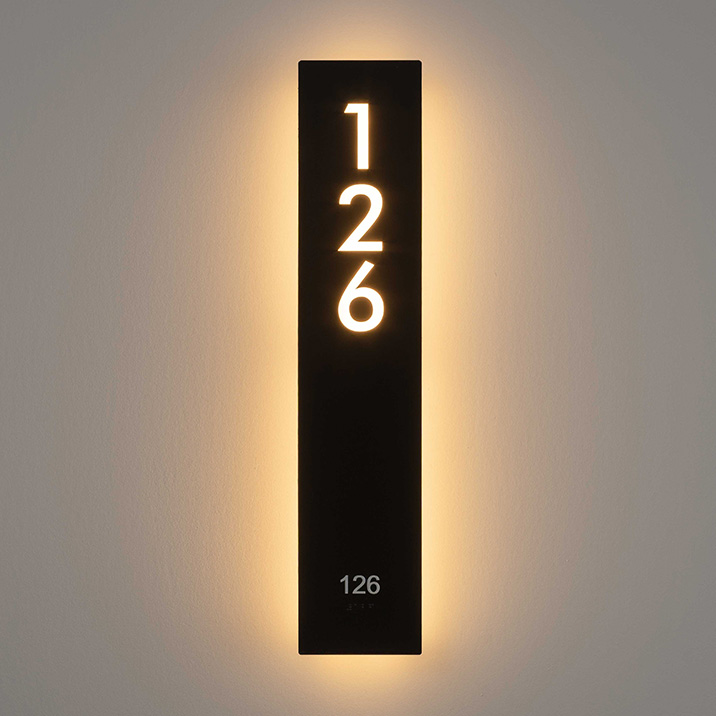
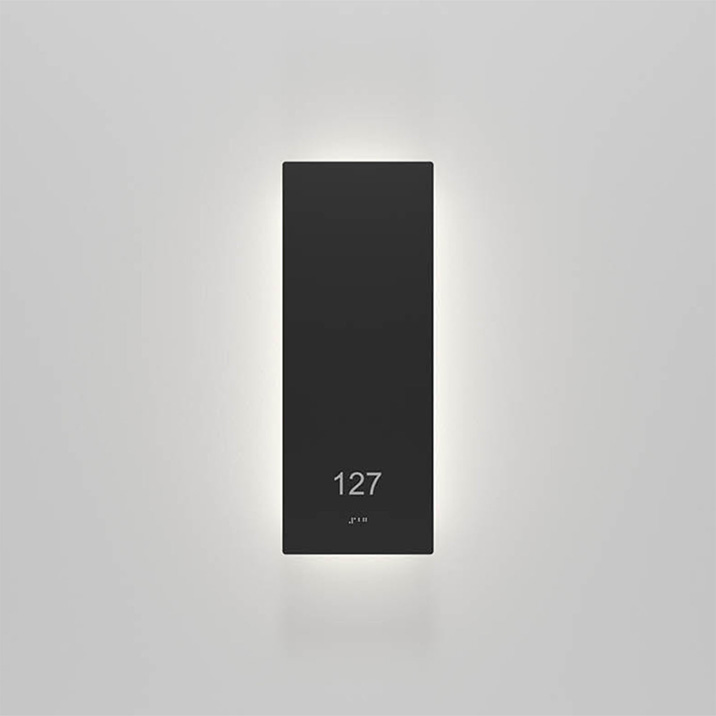
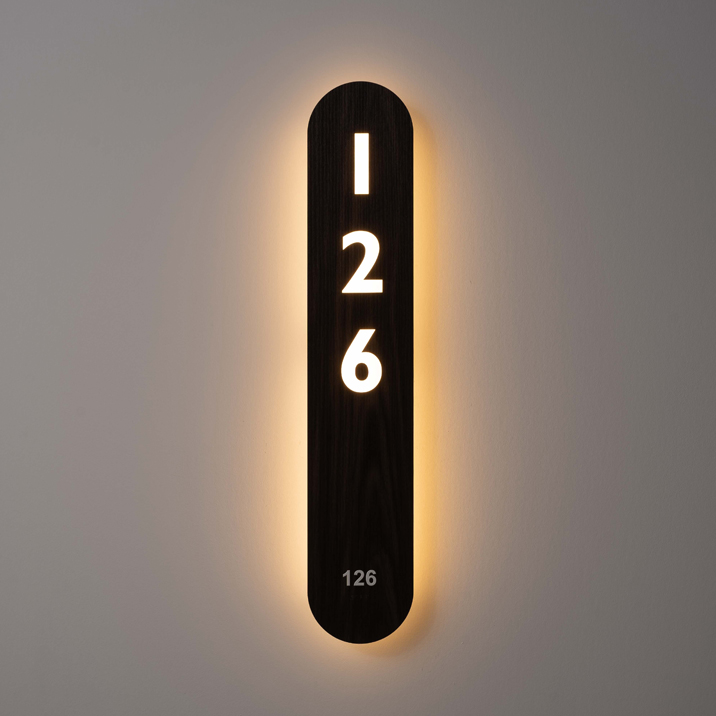
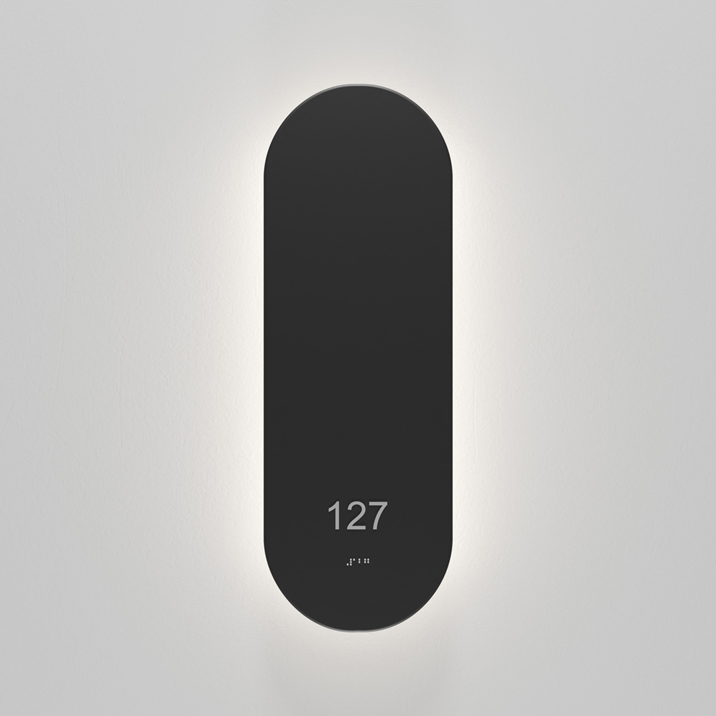
Rather than treating unit identification and lighting as two separate elements, Curt incorporates cut-out unit numbers or characters directly into the fixture. Lighting plus identification, integrated into one architectural element. And yes, we needed a name with “cut” in it. Curt wasn’t exactly a difficult leap. Kaela expanded the idea with a softer form, introducing rounded top and bottom edges that can help balance the many hard lines and angles found in multifamily corridors.
Then our customers asked us for something else: Can you make them smaller?
So, we did. Curt Jr. and Kaylee bring the same basic ideas into a smaller format, giving designers more flexibility to work with different wall conditions, proportions and spaces. After 16 years, we’ve learned something pretty important: listen to your customers and design what they need. Sometimes that’s also how a product family grows.
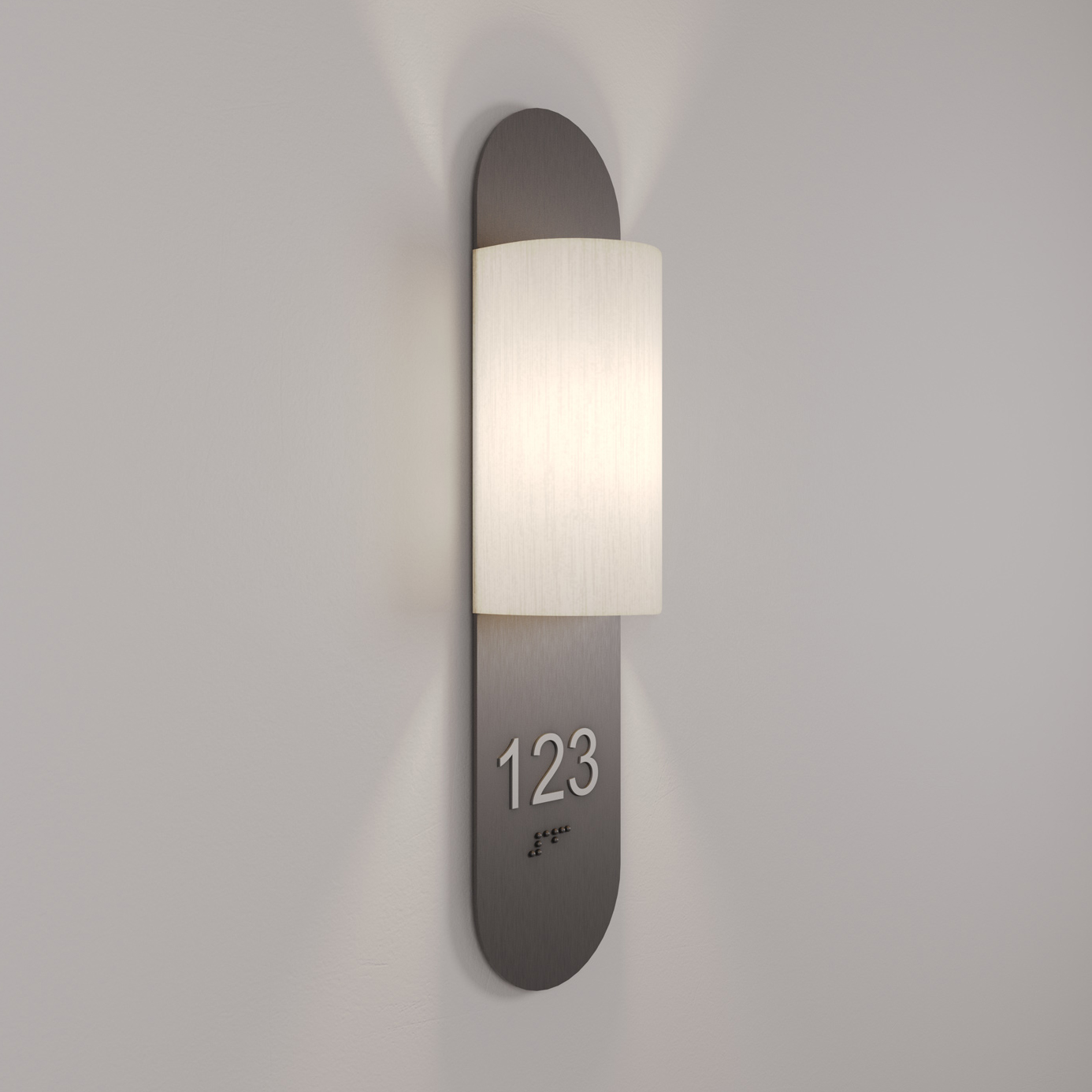
Multifamily and senior living spaces have something important in common: they need to balance the demands of a commercial environment with the feeling of home.
Tabitha was designed with that kind of environment in mind.
Tabitha solves a design problem for multifamily corridors. Every multifamily building I’ve seen has sharp angular hallways. Even apartment entrances have square angles. Yes, there are a few rare exceptions; however, multifamily corridors are highly angular.
Tabitha is rounded on top and bottom, also holds a curved shade. These curves immediately soften hard angles. Hence, when you look at Tabitha alongside any doorway, it immediately works, provides a soft comfortable entry for the visitor.
Its large, tablet-like shape was the inspiration behind the name Tabitha. Simple enough. And if you’re old enough to remember Bewitched, the name might make you smile for another reason.
Yes, Alva’s product names make our sconces easier to remember. And yes, we have a lot of fun coming up with them. But behind every name is something more important: a reason for the product to exist.
A material we wanted to celebrate, a corridor we wanted to improve, a new application, a customer request, a different way of shaping light. That’s the real story behind the Alva family.
Alva wall sconces are designed for a range of interior and exterior architectural applications, including multifamily, senior living, healthcare, commercial spaces and building exteriors. Different product families address specific design needs, from low-profile corridor lighting and integrated unit identification to façade illumination and Dark Sky considerations.
Start with the application and the problem you’re trying to solve. Consider where the fixture will be installed, its scale and projection from the wall, the desired lighting effect, the surrounding architecture and any project-specific requirements such as ADA or Dark Sky considerations. Alva offers different forms, sizes and lighting approaches to help designers find a solution that works with both the architecture and the application.
Yes. Alva offers wall sconces designed with multifamily and senior living environments in mind. Options include low-profile fixtures for corridors, softer forms that complement residential-inspired interiors, and sconces that can integrate unit numbers or characters directly into the fixture. The goal is to combine functional illumination with a more considered architectural and residential aesthetic.
Jay Almer
Alva Sales & Marketing
323-447-2783 | jalmer@luminii.com
 Back to top
 Select Location