Choosing the Right ALVA Sconce for Your Multifamily Project
It’s a question we hear often at ALVA from designers, architects, and developers. With a variety of styles to choose from, sometimes a conversation is the best way to narrow the options.
Every property has its own personality. A fixture that feels at home in a sleek downtown apartment building may take on a completely different look in a more traditional community. When I help customers choose, we usually start with the aesthetic, then work through size, light output, materials, and the role the sconce will play.
Let’s start with four familiar style directions: modern, minimalist, contemporary, and traditional. Think of these as starting points. Your finishes and surrounding architecture will help make the look your own.
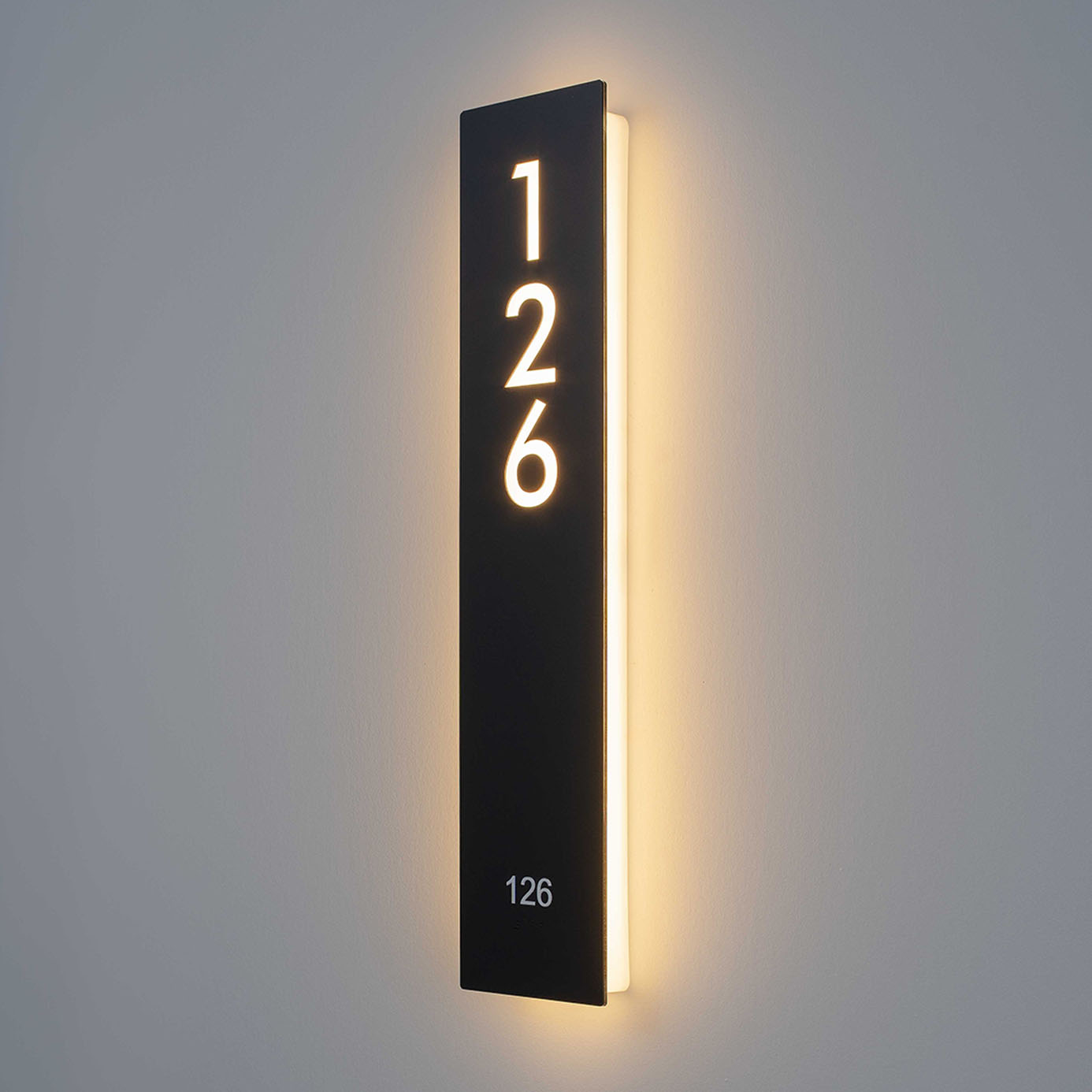
When a customer is looking for clean lines and a modern feel, Curt, Kaela, and Indicut are often where I start. Backlit illumination and cut-out unit numbers create a distinctive apartment entry that feels right at home in a streamlined corridor.
The details help narrow the choice: Curt has square corners, Kaela offers rounded corners, and Indicut features a top shade. Think about the lines already in your space from the doors to the hardware, and which fixture feels most connected to them.
Sometimes a customer likes the look of Curt or Kaela but wants something a little more understated. That’s where Curt Jr. and Kaylee come in.
Their smaller scale offers a more discreet presence, while perimeter lighting creates a floating effect against the wall. These are useful when the goal is to add a thoughtful detail to each apartment entry without overwhelming the surrounding space.
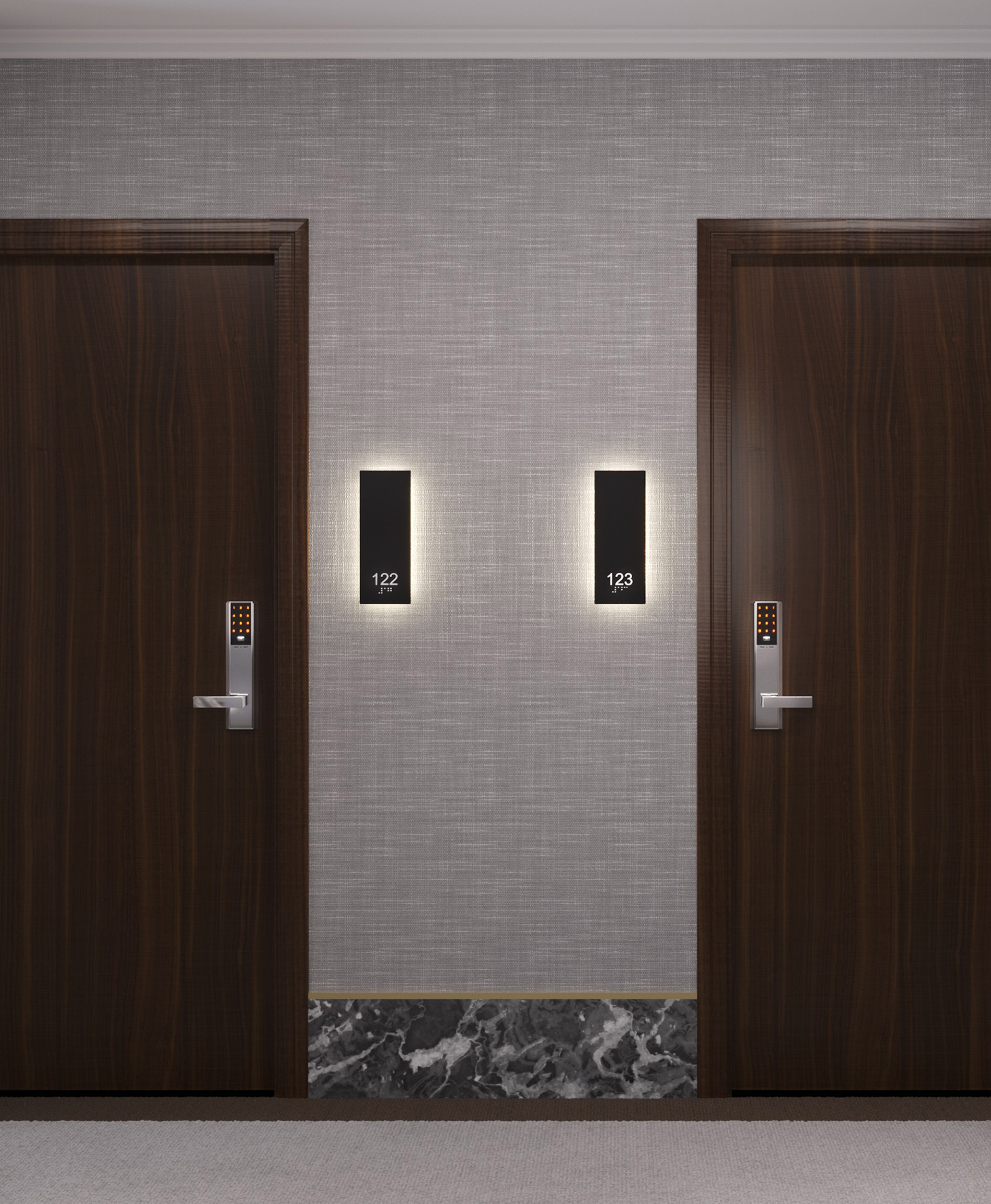
Curt Jr
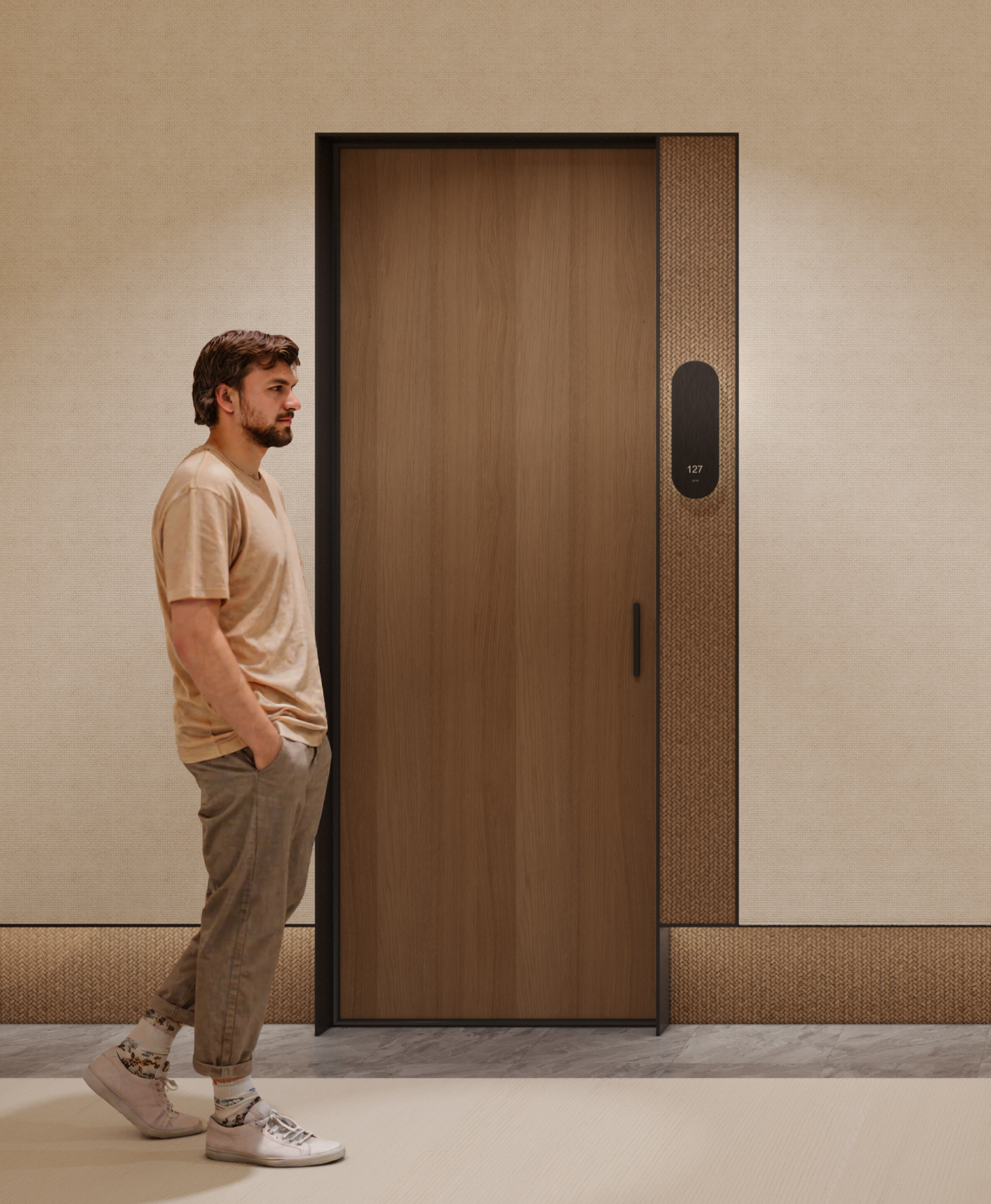
Kaylee
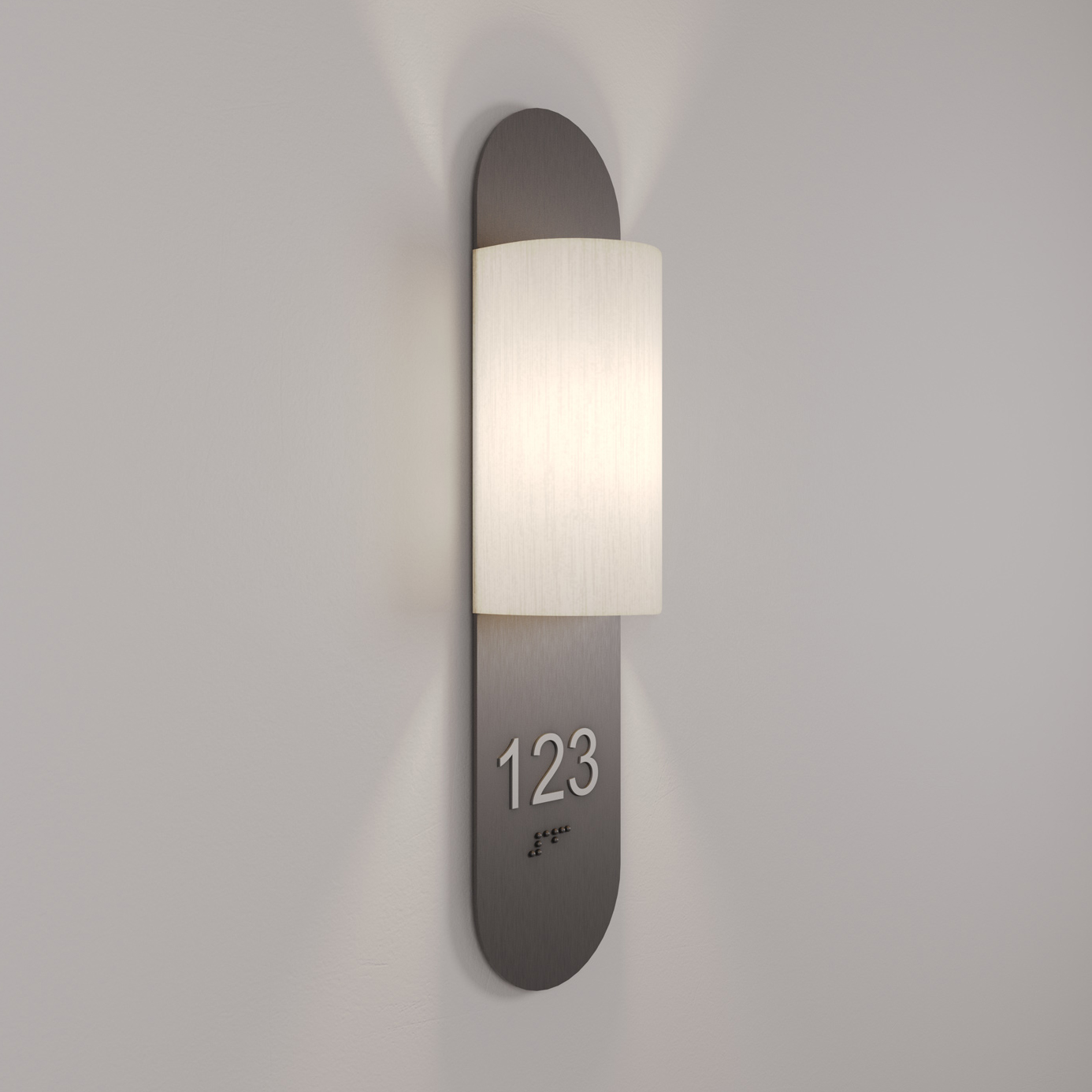
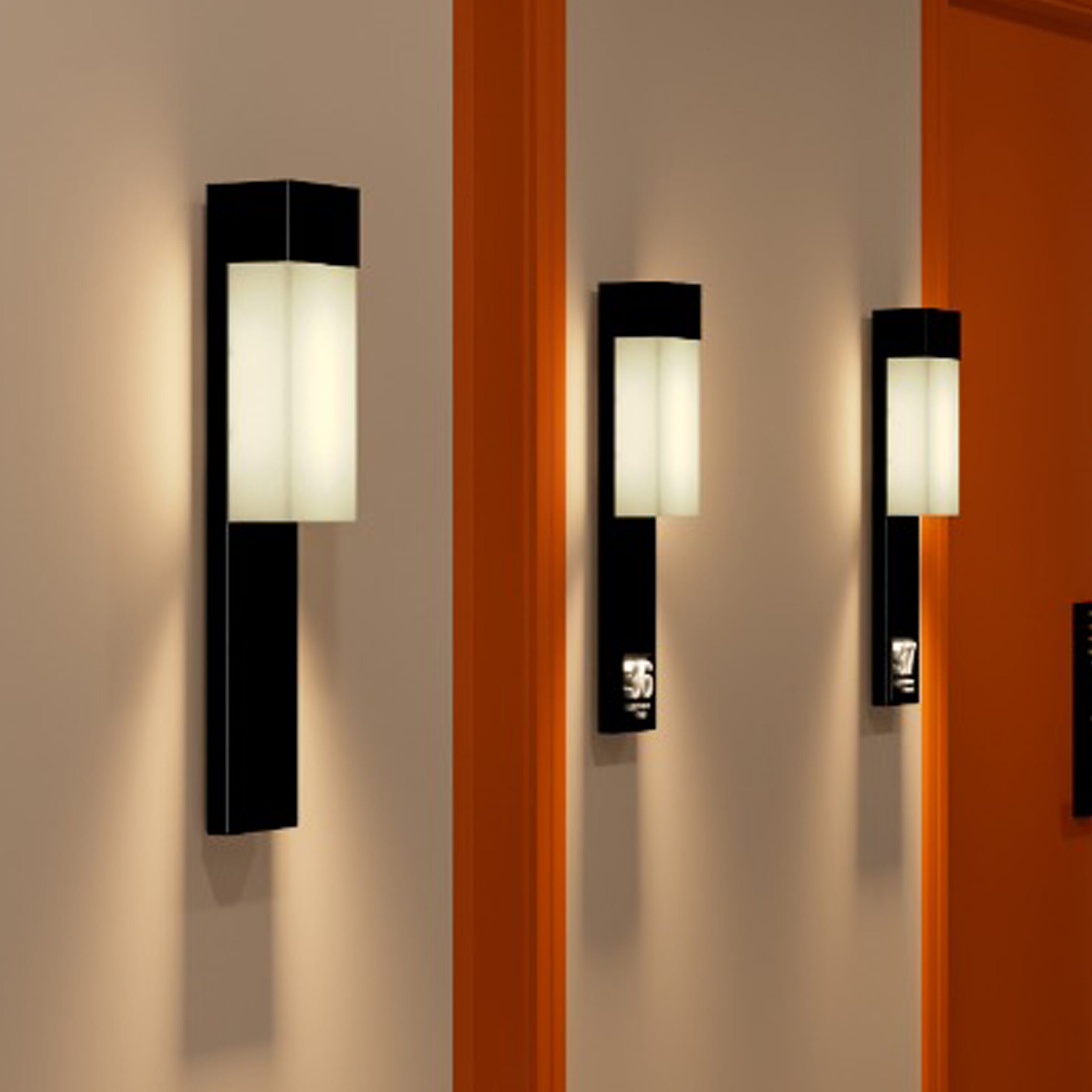
When a customer wants something welcoming and versatile, these three families often come up in the conversation. Their proprietary resin shades provide a gentle glow, while the different shapes offer ways to connect with the surrounding architecture.
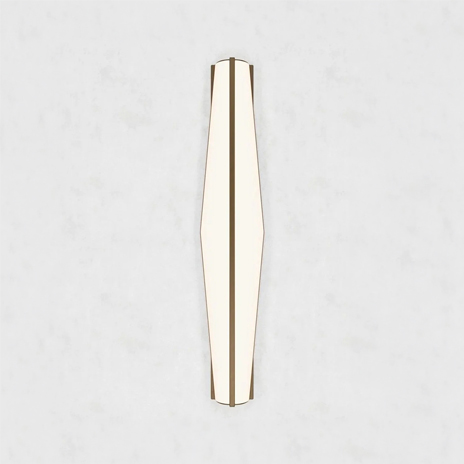
Tabitha features radius corners, Edwin has square corners, and Edwina has rounded corners. Your choice of resin and metal finish can take each in a different direction, making these useful starting points as you refine the look.
Shown Right: Tabitha Wall Sconce
After years of visiting multifamily properties across North America, I’ve learned that every market has its own personality. Some lean toward clean, modern lines; others embrace a more classic look.
When someone asks about Amelia, a look at the property often reveals that traditional character. Amelia is available in a range of resin finishes, but faux alabaster is a longtime favorite for these spaces. Its stone-inspired appearance brings warmth to the entry, paired with the durability of ALVA’s resin.
Indira Curved and Indira Rectangle are also worth exploring as you consider the forms and finishes that suit your building.
Shown Left: Amelia Wall Sconce
Design Your Light is one of my personal favorites because it gives designers room to make the fixture their own. Start with the shade shape and size, choose a resin finish, then add optional decorative elements to bring it all together. If you have a particular look in mind, this collection gives us a great place to start the conversation.
We can also discuss pricing and available delivery options as you narrow your selection.
Once you have a style in mind, the next question is usually about light output. This is where I encourage customers to step back and look at the whole corridor: what are you asking the sconce to do?
You want the space to feel welcoming, with comfortable illumination that helps residents and guests find their way. The right output depends on the other lighting in the space, fixture spacing, and the corridor itself.
Here are three situations we commonly work through.
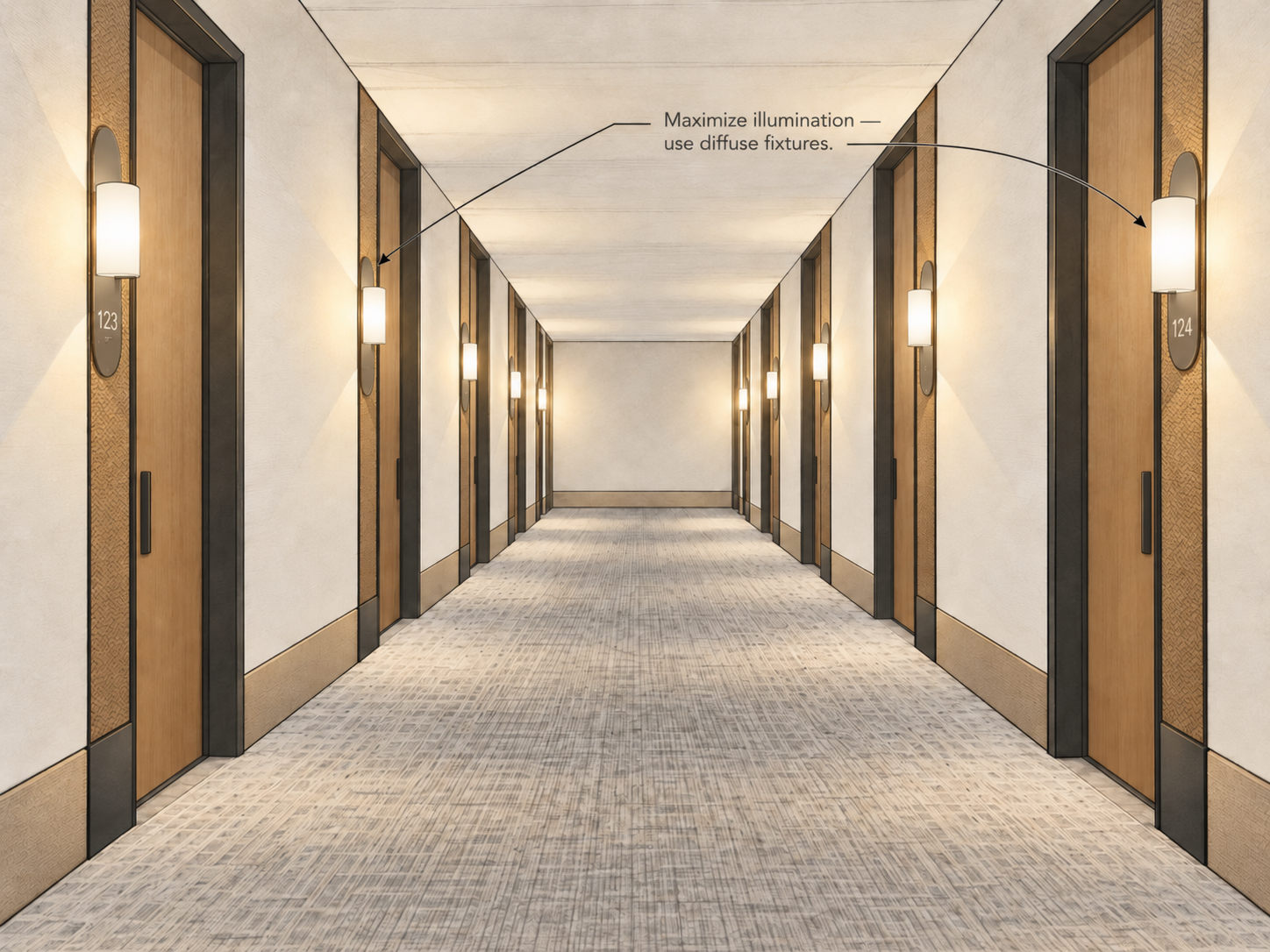
In some new buildings and some existing properties, the fixtures beside apartment doors provide the primary corridor lighting. When that’s the setup, those sconces have a lot of work to do.
What to consider: Look at fixtures that distribute diffuse light into the corridor, such as Tabitha, Edwin, or Edwina. Output matters, but so do spacing, wall finishes, ceiling height, and how evenly the light reaches the space. A photometric review helps the project team evaluate the proposed layout against its lighting requirements.
A helpful feature: Where available, LumenSelect lets you adjust output to suit the application. Confirm the available settings for your selected model; the highest setting alone doesn’t establish that the corridor has adequate illumination.
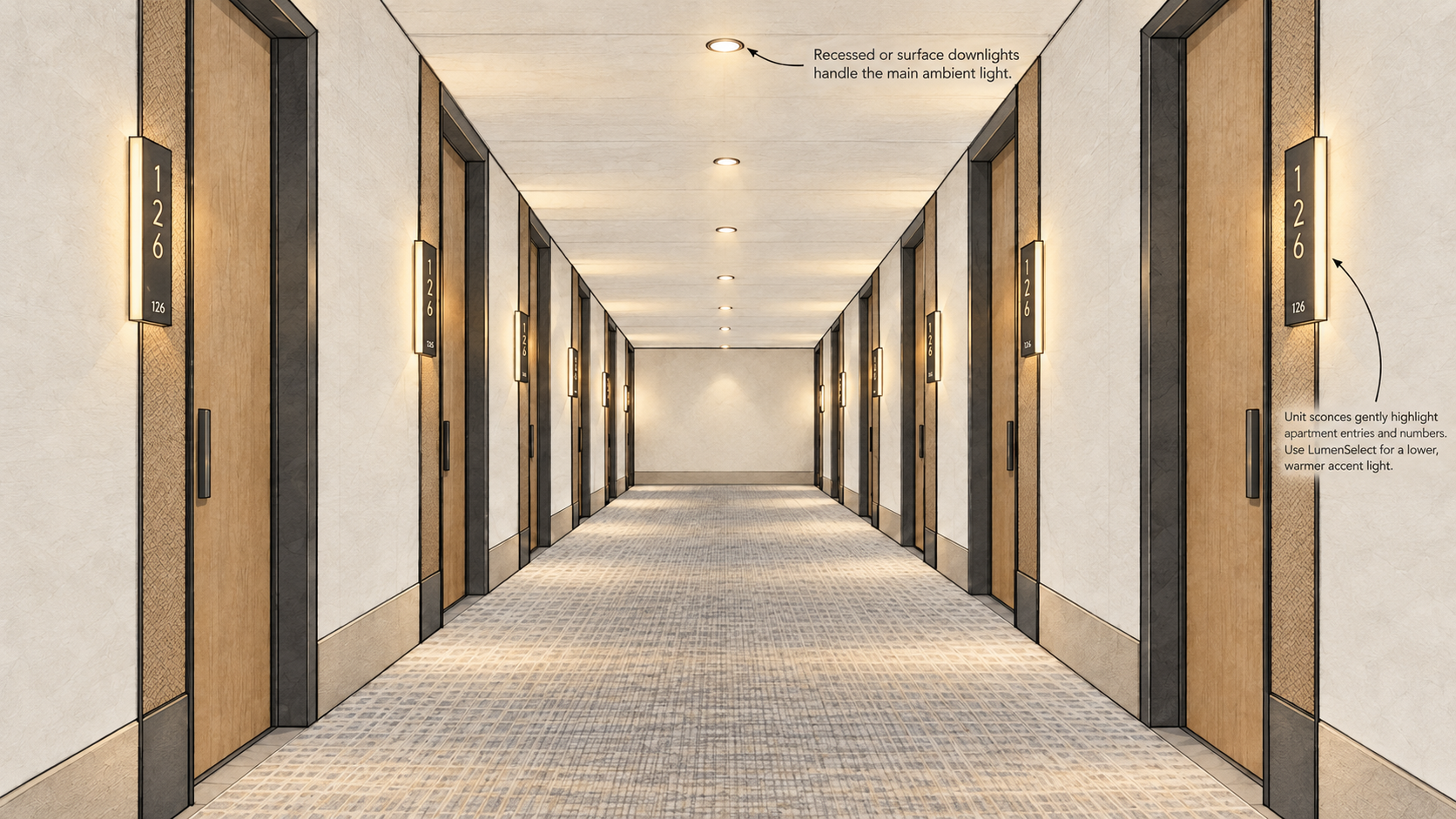
This is a familiar approach: downlights provide the main corridor illumination, while unit sconces highlight apartment entries and door numbers.
What to consider: The sconces can have a quieter role here. Aim for a balance that makes each entry easy to find and welcoming without competing with the surrounding lighting.
A helpful feature: Where available, LumenSelect can help you fine-tune output. Color temperature is a separate choice, so consider both as you create the atmosphere you want.
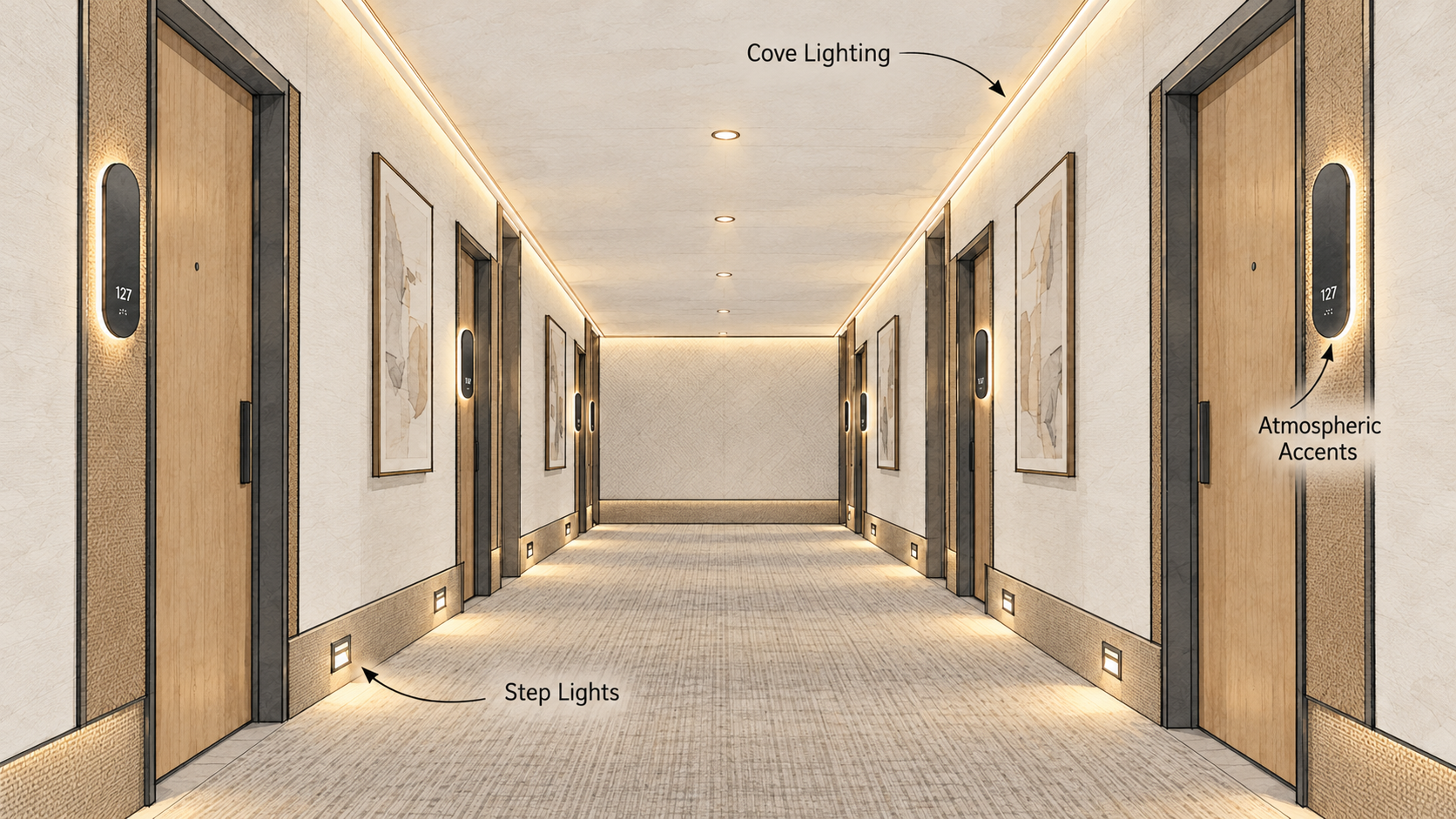
Personally, I love seeing a lighting designer bring unit sconces into a thoughtful lighting plan. Each source has a purpose, from supporting circulation to highlighting architectural details and adding atmosphere.
What to consider: Sconces can become decorative accents and recognizable points of arrival, with other sources addressing the corridor’s broader lighting needs.
Of course, every project has its own budget and constraints. Whether you’re working with several light sources or a simpler layout, understanding the sconce’s role will help with selection.
This is one of the toughest questions to answer without seeing the space. Door proportions, available wall area, and corridor width all influence what feels right. Unit numbers and Braille also need to be considered when selecting a configuration.
ALVA offers ADA-compliant products, but selecting a compliant fixture does not, by itself, establish compliance for the installation or overall project. Customers and their project teams are responsible for researching applicable requirements and confirming that the selected configuration, signage, mounting height, and placement meet them.
We’re happy to provide dimensions and product details to support your review, and help you compare sizes along the way.
Our proprietary resin shades offer a range of looks, including faux alabaster, with IK10-rated impact resistance suited to demanding environments.
If you haven’t seen ALVA’s durability demonstration, it’s worth a look: founder Sean McMurray drops a bowling ball onto a fixture to put the resin to the test.
And while the demonstration tells one part of the story, samples help with another: choosing the appearance that belongs in your space. Ask us for resin samples so you can compare them with your project palette.
We offer six standard metal finishes, with premium Chemetal options available on select sconces.
If you’re coordinating with door hardware, wall coverings, or other materials, samples can make the decision much easier. Let us know what you’re considering, and we can confirm the available finishes for your fixture and arrange samples.
Residents may never know the name of the sconce beside their door, but they experience its light every day. It helps them find their apartment and contributes to how welcoming the building feels when they come home.
Repeated throughout a property, the choice of fixture, finish, and light output can make a meaningful difference. It’s worth taking the time to get those details right—and you don’t need to have every answer before reaching out.
Send me your corridor plan, a few project photos, or the finishes you’re considering. Tell me what you’re trying to achieve and where you’re getting stuck. We can talk through the options, narrow the choices, and get samples into your hands.
Let’s find the right fit for your building.
Jay Almer
Alva Sales & Marketing
323-447-2783 | jalmer@luminii.com

 Back to top
 Select Location